I agree with Joseph Sabol.
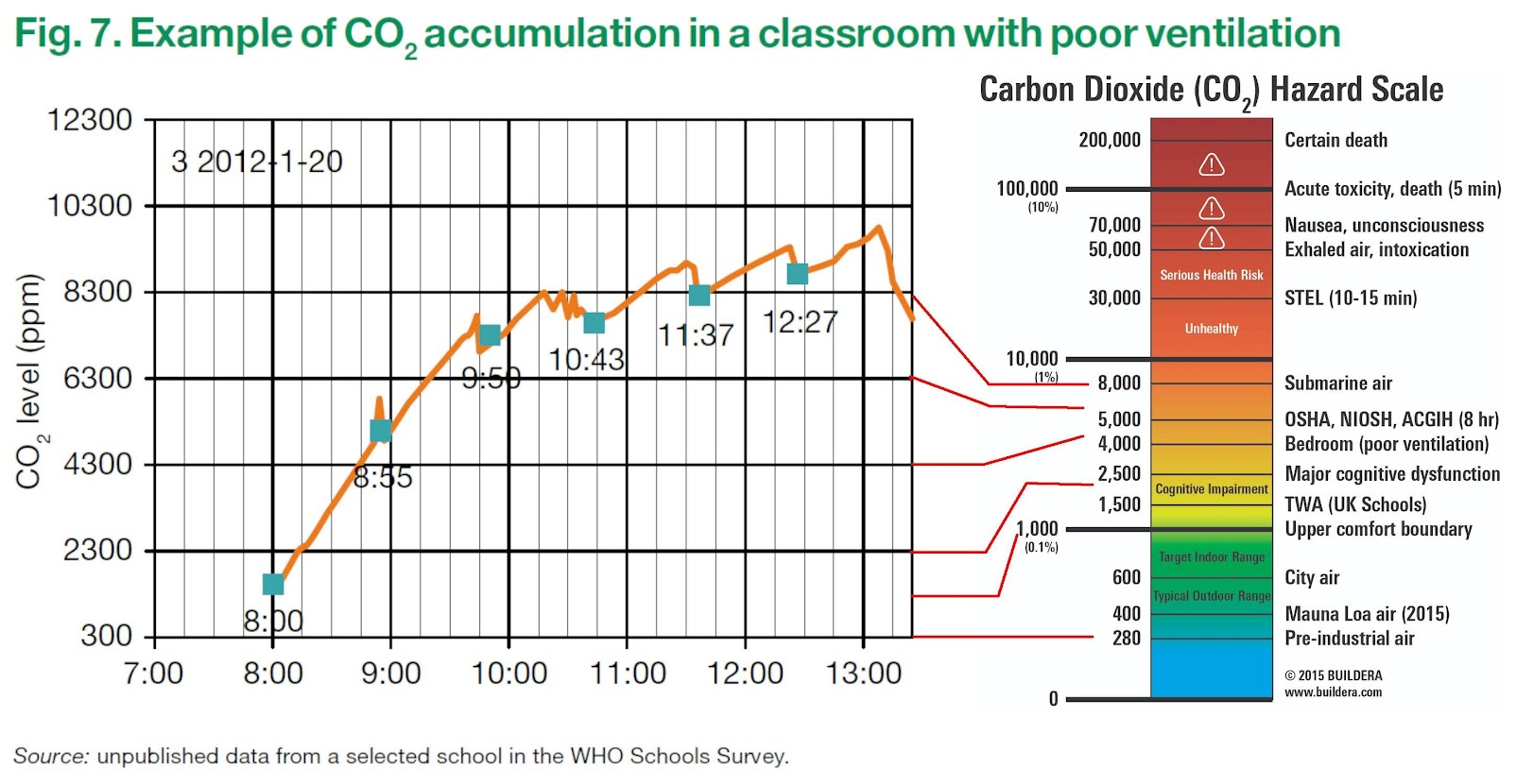
CO₂ sensors are great for checking ventilation when you have a steady source of CO₂ from living, breathing people, e.g., students.
Typical outdoor CO₂ is often around 450 to 550 ppm in more populated areas. If your indoor CO₂ climbs to 2000 ppm, or even as high as 6000 ppm or more, you know you have a ventilation problem that needs attention.
My teaching lab is about 450 m³ and has as many as 24 students plus myself. I keep an Aranet4 running during our lab sessions. Only once have I seen the CO₂ rise above 700 ppm, and that was when the fume hoods malfunctioned for about an hour.
Here is a calculator you can use to estimate ACH (air changes per hour) for a given space:
Visit: tinyurl.com/ACHcalc1
One reason I am particularly concerned about ventilation is the potential for respiratory aerosols to build up. I have pulmonary fibrosis and really cannot afford another hospital stay. I started monitoring ventilation at the beginning of the pandemic and completely avoided infection during that period even until today. Prior to the pandemic, I had pneumonia three years in a row, was hospitalized twice, and only this year finally got the related hospital bills resolved. My alarm bells start going off when I see CO₂ above about 800 ppm.
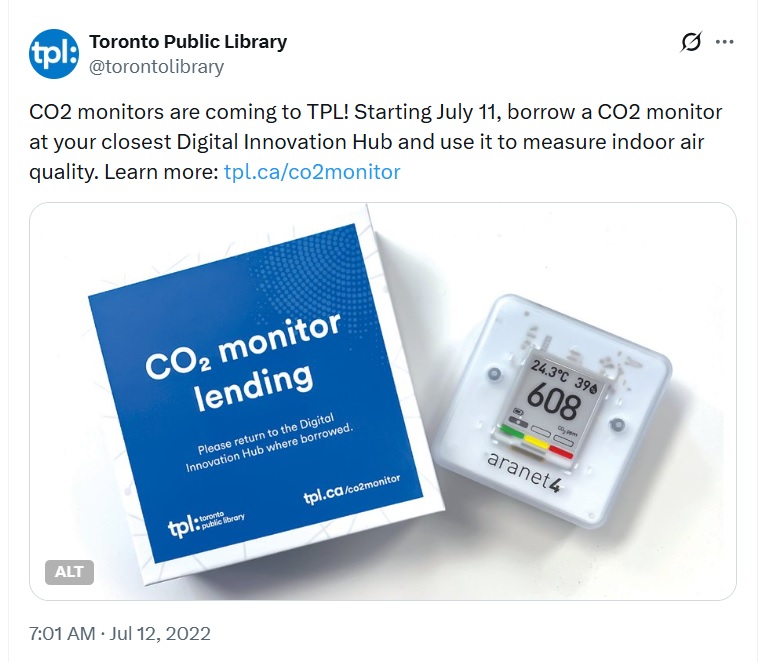
Toronto was one of the first library systems I remember seeing make CO₂ monitors available for patrons to borrow.
If you are on social media, try searching for #SchoolCO2. You will be led to a lot of fascinating real-world examples of CO₂ monitoring in classrooms and other occupied spaces.