| The Home page of ILPI's Safety Data Sheet (SDS) Resource, the leader in SDS information since 1995! | |
| The history and philosophy behind this resource. | |
| A curated collection of books and reference materials concerning Safety Data Sheets and closely related topics. | |
| Paste your plain text SDS into the SDS-Demystifier, and it will be converted into a hypertext-enriched document with links to detailed explanations of each key term. | |
| An extensive list of frequently asked questions about Safety Data Sheets including regulations, content, compliance, and more. | |
| A humorous take on Safety Data Sheet jargon. Fill in the blanks on our entry form to generate a personalized Unsafety Data Sheet to share with your coworkers. | |
| Since 1995, we've maintained this massive curated list of the best places to find Safety Data Sheets on the Internet. | |
| Way more than a glossary, this hypertext-enhanced resource covers hundreds of SDS-related terms and expert knowledge. Each entry includes both the SDS relevance and links to additional authoritative resources. | |
| Archived results of Safety Data Sheet related polls taken by some of our millions of site visitors | |
| You are here! The OSHA regulations behind SDS regulations, including the inspection guidelines and over 400 official interpretations letters under the Hazard Communication Standard | |
| Commercial suppliers of SDS authoring and management software as well as cloud compliance services. | |
| Commercial companies that will create SDS's for your specific needs as well as SDS translation companies. |

Safety signs, banners, and scoreboards? Get yours at Safety Emporium!
OSHA Hazard Communication Letters of Interpretation
Maintenance of material safety data sheets(MSDS) and the written hazard communication program.
- Issued
- Record type
- Interpretation
- Historical standard
- 1910.1200, 1987 expanded rule (PDF)
- Current standard
- HCS 2024, as amended
ILPI assessment: Existing SDS can cover directed dilution when its information remains applicable
This letter addresses the obsolete 1987 version of the Hazard Communication Standard (HCS). Its narrow conclusion remains useful: an employer need not automatically create a new SDS merely for dilution according to the manufacturer's directions when the supplier's SDS actually covers that use and resulting hazards. This is not a blanket exemption for every diluted, reformulated, or redistributed mixture.
Under the current HCS, apply classification responsibilities and anticipated uses, mixture procedures, and SDS duties. See the mixture explanation. Separate EPCRA/SARA reporting is administered by EPA; the old hotline/address is historical and the letter does not resolve current reporting obligations.
Last reviewed: .
About this ILPI assessment
This comparison with current requirements is not a finding that OSHA has formally withdrawn this letter. This assessment reflects editorial judgment informed by human review and AI assistance. It is an opinion, may contain errors or omissions, and is not an official OSHA determination. For guidance on how OSHA requirements apply to your circumstances, contact your local OSHA office.
OSHA's notice about interpretation letters
The following notice is published on OSHA's interpretation pages; it is general guidance, not a letter-specific withdrawal notice.
OSHA requirements are set by statute, standards and regulations. Our interpretation letters explain these requirements and how they apply to particular circumstances, but they cannot create additional employer obligations. This letter constitutes OSHA's interpretation of the requirements discussed. Note that our enforcement guidance may be affected by changes to OSHA rules. Also, from time to time we update our guidance in response to new information. To keep apprised of such developments, you can consult OSHA's website at https://www.osha.gov.
Source: OSHA's original letter page.
July 31, 1989
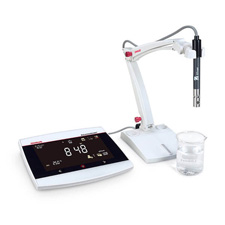
Safety Emporium is your solution for water and pH analysis equipment for conductivity, TDS, ORP, salinity, dissolved oxygen and more!
Mr. Charles E. Lindsay
Lindsay Hardwoods, Incorporated
Post Office Box 343
Highway 15 and 460 West
Farmville, Virginia 23901
Dear Mr. Lindsay:
This is in response to your correspondence of May 2, regarding SARA Title III reporting requirements under sections 311, 312 and 313.
The Hazard Communication Standard (HCS), 29 CFR 1910.1200 [ILPI: Original HCS 1987 context (PDF) · Current HCS], requires a material safety data sheet (MSDS) to be developed for each hazardous chemical produced by a manufacturer. The MSDS developed by the chemical manufacturer should contain hazard information on the chemical for all its expected uses downstream. Therefore, as Jim Johnston mentioned to you, you are not required to generate a new MSDS when the product is diluted to its working strength, according to the manufacturer's directions. The MSDS received from the manufacturer is applicable to the diluted mixture.
[ILPI note: At issuance: 1910.1200, 1987 expanded rule (PDF). The conclusion is conditional on the existing SDS actually covering the directed dilution and its hazards. Current counterparts: classification/use evaluation, mixture procedures, and SDS duties.]
The SARA Title III reporting requirements are administered by the Environmental Protection Agency. Your letter has been forwarded to the EPA for their response at the following address:
The Environmental Protection Agency
Emergency Planning and Community Right to-know Information Hotline
Attn: Ms. Minda Sarmiento
OS-120 401 M Street, S.W.
Washington, D.C. 20460
We hope this information is helpful to you. Please feel free to contact us again if further assistance is needed.
Sincerely,
Patricia K. Clark, Acting Director
Directorate of Compliance Programs
The original official public domain version of this document is available from OSHA at https://www.osha.gov/laws-regs/standardinterpretations/1989-07-31.