| The Home page of ILPI's Safety Data Sheet (SDS) Resource, the leader in SDS information since 1995! | |
| The history and philosophy behind this resource. | |
| A curated collection of books and reference materials concerning Safety Data Sheets and closely related topics. | |
| Paste your plain text SDS into the SDS-Demystifier, and it will be converted into a hypertext-enriched document with links to detailed explanations of each key term. | |
| An extensive list of frequently asked questions about Safety Data Sheets including regulations, content, compliance, and more. | |
| A humorous take on Safety Data Sheet jargon. Fill in the blanks on our entry form to generate a personalized Unsafety Data Sheet to share with your coworkers. | |
| Since 1995, we've maintained this massive curated list of the best places to find Safety Data Sheets on the Internet. | |
| Way more than a glossary, this hypertext-enhanced resource covers hundreds of SDS-related terms and expert knowledge. Each entry includes both the SDS relevance and links to additional authoritative resources. | |
| Archived results of Safety Data Sheet related polls taken by some of our millions of site visitors | |
| You are here! The OSHA regulations behind SDS regulations, including the inspection guidelines and over 400 official interpretations letters under the Hazard Communication Standard | |
| Commercial suppliers of SDS authoring and management software as well as cloud compliance services. | |
| Commercial companies that will create SDS's for your specific needs as well as SDS translation companies. |

Safety signs, banners, and scoreboards? Get yours at Safety Emporium!
OSHA Hazard Communication Letters of Interpretation
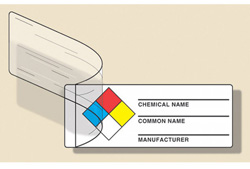
Using "stick-on" labels to meet the requirements of 1910.1200.
- Issued
- Record type
- Interpretation
- Historical standard
- HCS 1994, pre-GHS archive
- Current standard
- HCS 2024, as amended
ILPI assessment: Label construction may work; historical label content is incomplete today
This letter addresses the obsolete 1994 version of the Hazard Communication Standard (HCS). A durable combination of permanent and replaceable labels can convey hazard information, but this letter's historical list of label elements is not a complete current shipped-label specification. Approval was limited to the described arrangement.
Distinguish shipped-container labels from workplace alternatives. A workplace alternative must identify the product and provide the required hazard information with the other immediately available information; labels must remain legible and prominently displayed. Changing solvents requires matching the identifier, hazards and SDS. Sticky labels do not remove any required element.
Last reviewed: .
About this ILPI assessment
This comparison with current requirements is not a finding that OSHA has formally withdrawn this letter. This assessment reflects editorial judgment informed by human review and AI assistance. It is an opinion, may contain errors or omissions, and is not an official OSHA determination. For guidance on how OSHA requirements apply to your circumstances, contact your local OSHA office.
OSHA's notice about interpretation letters
The following notice is published on OSHA's interpretation pages; it is general guidance, not a letter-specific withdrawal notice.
OSHA requirements are set by statute, standards and regulations. Our interpretation letters explain these requirements and how they apply to particular circumstances, but they cannot create additional employer obligations. This letter constitutes OSHA's interpretation of the requirements discussed. Note that our enforcement guidance may be affected by changes to OSHA rules. Also, from time to time we update our guidance in response to new information. To keep apprised of such developments, you can consult OSHA's website at https://www.osha.gov.
Source: OSHA's original letter page.
October 20, 1999
James M. Kuszaj, Ph.D.
9650 Strickland Road
Suite 103-209
Raleigh, North Carolina 27615
Dear Dr. Kuszaj:
We are in receipt of your letter of March 22, 1999 regarding labeling provisions under the Hazard Communication Standard (HCS), 29 CFR 1910.1200 [ILPI: Original HCS 1994 context · Current HCS]. You described a labeling system used by your client and asked if this system meets the requirements of the HCS. This letter follows up on a phone conversation you had with a member of my staff. Please excuse this delay in providing these written comments.
The labeling system you described is designed for four different solvents with similar hazards. These solvents are used rotationally in one piece of equipment. You have proposed to label the equipment permanently with the manufacturer's name and the products' appropriate hazard warnings, including target organ effects. The solvent identity would be adhered to the equipment using "stick-on" labels. Differences in health effects that the solvents present (such as carcinogenicity) would be printed on the "stick-on" label.
The labeling requirements of the HCS include the identity of the hazardous chemical(s); appropriate hazard warnings; and the name and address of the chemical manufacturer, importer, or other responsible party. The labeling system you have proposed appears to meet these requirements.
[ILPI note: At issuance: HCS 1994, pre-GHS archive. This is the pre-GHS label-content list. Current shipped labels require additional standardized elements; workplace alternatives are governed by (f)(6), not this historical list alone.]
Thank you for your interest in occupational safety and health. If you require further information, you may contact the Office of Health Compliance Assistance at 202-693-2190.
Sincerely,
Richard E. Fairfax, Director
Directorate of Compliance Programs
The original official public domain version of this document is available from OSHA at https://www.osha.gov/laws-regs/standardinterpretations/1999-10-20-0.