From:
Ryan, Patrick <patrick.ryan6**At_Symbol_Here**MONTANA.EDU>
Subject:
Re: [DCHAS-L] Peroxide strips and 2-propanol
Date:
Oct 7, 2025 14:24 UTC
Reply-To:
ACS Division of Chemical Health and Safety <DCHAS-L**At_Symbol_Here**Princeton.EDU>
In-Reply-To:
Re: [DCHAS-L] Peroxide strips and 2-propanol
All,
One of the things that may be missed here is that Water Works peroxide test strips are *not designed for use in organic solvents, but rather aqueous solutions only.
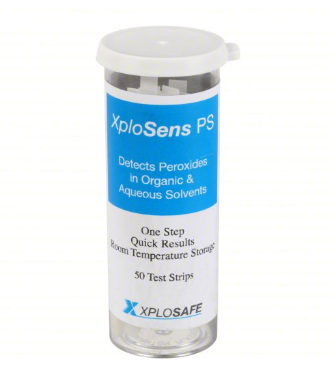
XploSens PS test strips test for peroxides in both organic solvents and aqueous solutions, making them more appropriate for use in this testing context.
Patrick A. Ryan, CIH, CSP, CHMM
Montana State University
From: ACS Division of Chemical Health and Safety <DCHAS-L**At_Symbol_Here**Princeton.EDU>
On Behalf Of Info
Sent: Friday, October 3, 2025 1:34 PM
To: DCHAS-L**At_Symbol_Here**Princeton.EDU
Subject: Re: [DCHAS-L] Peroxide strips and 2-propanol
**External Sender**
No personal experience but these articles will give you pause, for sure!
Use and Storage of Peroxide-Forming Solvents
The solvents most commonly used in the laboratory solvents, such as diethyl ether, tetrahydrofuran, cyclohexene, glycol ethers, decalin and 2-propanol are shown in Group B of the previous section. These
compounds produce organic peroxides that are significantly less volatile than the solvent in which they are formed, as a result, evaporative concentration or distillation can produce dangerous levels of peroxides. In fact, most Group B solvents are sufficiently
volatile that multiple openings of a single container can result in significant and dangerous peroxide concentration. The next section contains a list of key aspects to consider when handling peroxide-forming solvents.
Rob Toreki
I am doing a chemical hygiene independent study course with a student, and (mainly for educational purposes) we tested our 2-propanol in the stock room with peroxide test strips. There was an intense unmistakable color change, which seemed
surprising given that the containers are less than 1 year old. My question is if others of you with more experience have gotten positive tests like this--can it really contain that much peroxide or is there some other interference happening with the test strips?
-
The brand is "WaterWorks", not expired.
-
The strip was dipped in the 2-propanol, extra drips removed, then a drop of DI water was added to the strip.
-
We also tried it in reverse-adding the water first, then dipping. Same result.
-
Other organics tested in this way did not indicate any peroxides.
We don't distill the stuff so I'm not overly concerned, mainly curious. What's happening?
--
Laurie M. Yoder, PhD (she,her)
Schedule an appointment here
Associate Professor of Chemistry and Chemical Hygiene OfficerFaculty Athletics RepresentativeEastern Mennonite University
--- For more information about the DCHAS-L e-mail list, contact the Divisional membership chair at
membership**At_Symbol_Here**dchas.org
--- For more information about the DCHAS-L e-mail list, contact the Divisional membership chair at
membership**At_Symbol_Here**dchas.org