Good afternoon Kayla,
Hope all is well. I have spoken with many lab managers and microbiology faculty regarding this, and this is a very common problem in academic institution microbiology labs. We also had this same problem with splash back during gram stain collection at our
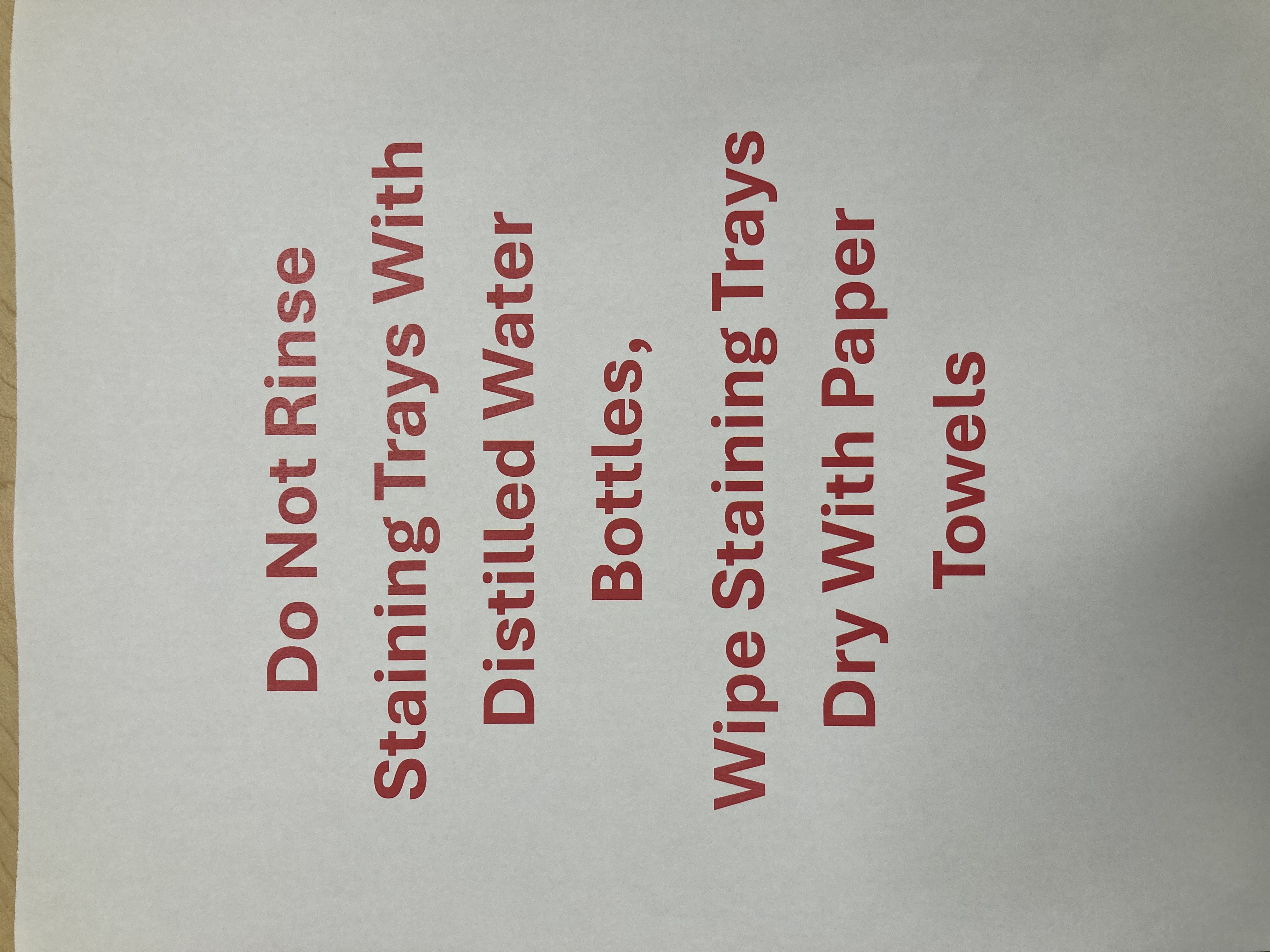
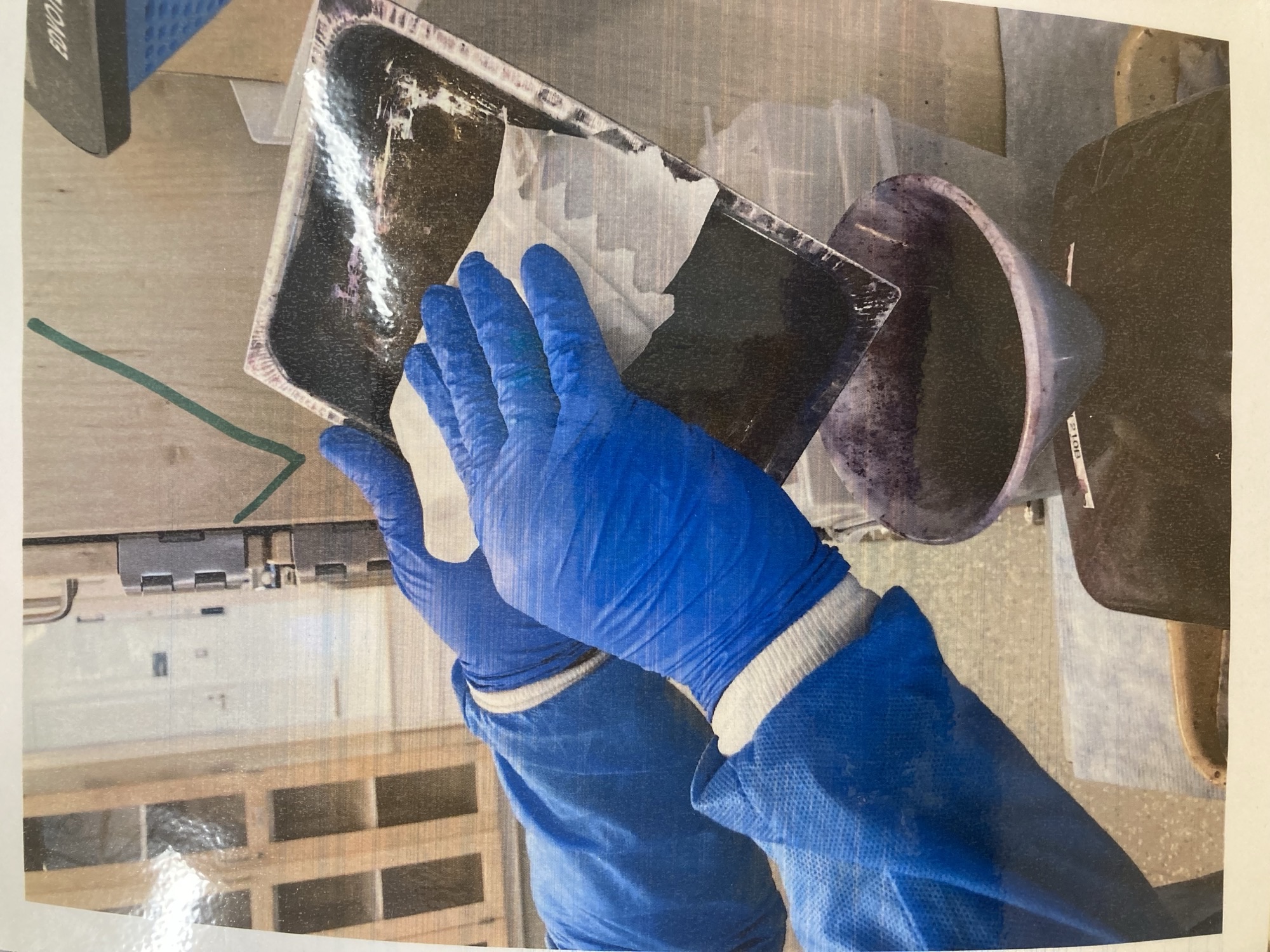
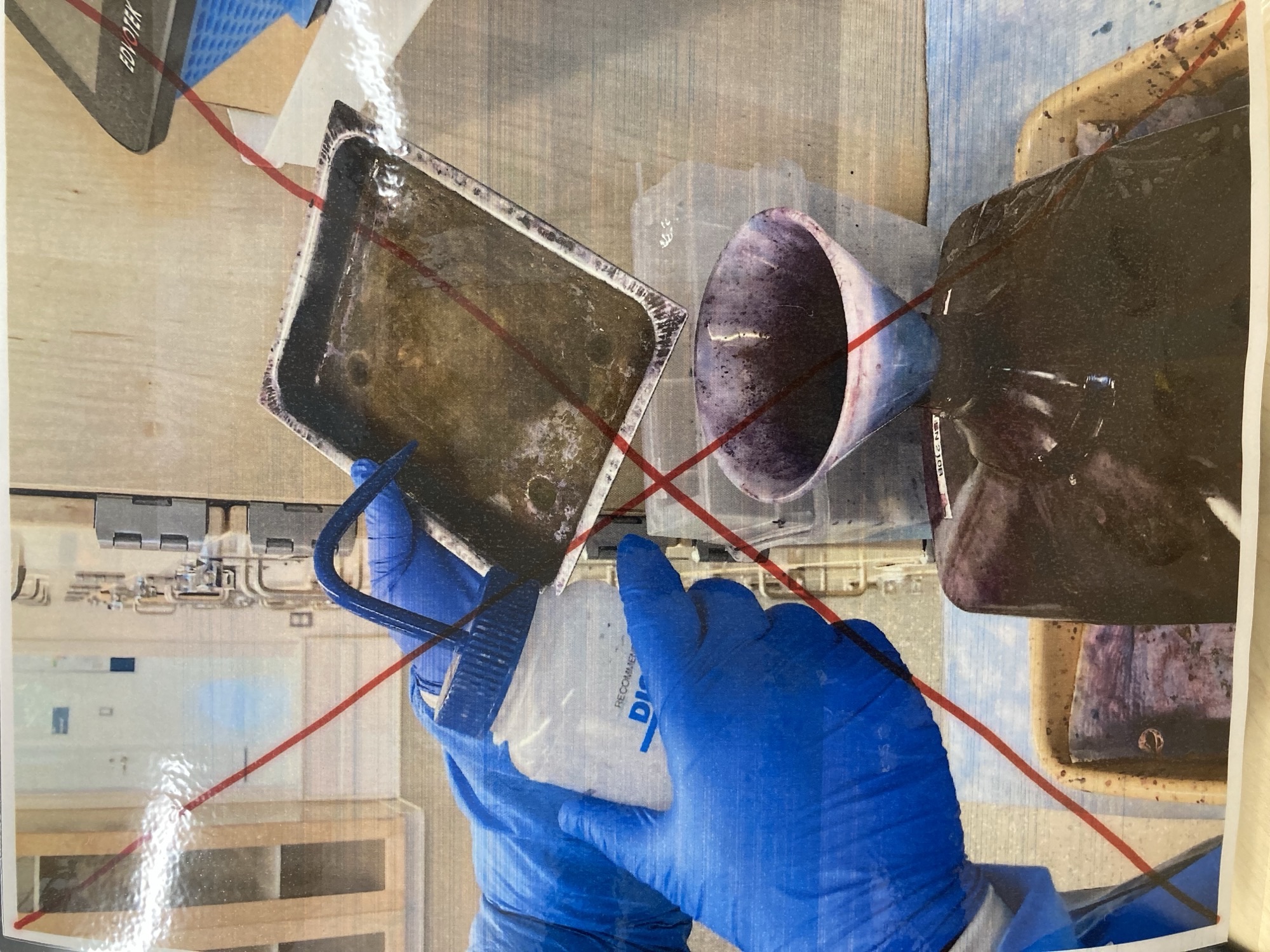
institution. In response to this I created a protocol in which we no longer have splash back on our students, walls, or lab benches. This is done by not using distilled water to rinse the trays, but to pour as much of the stain as possible into a properly
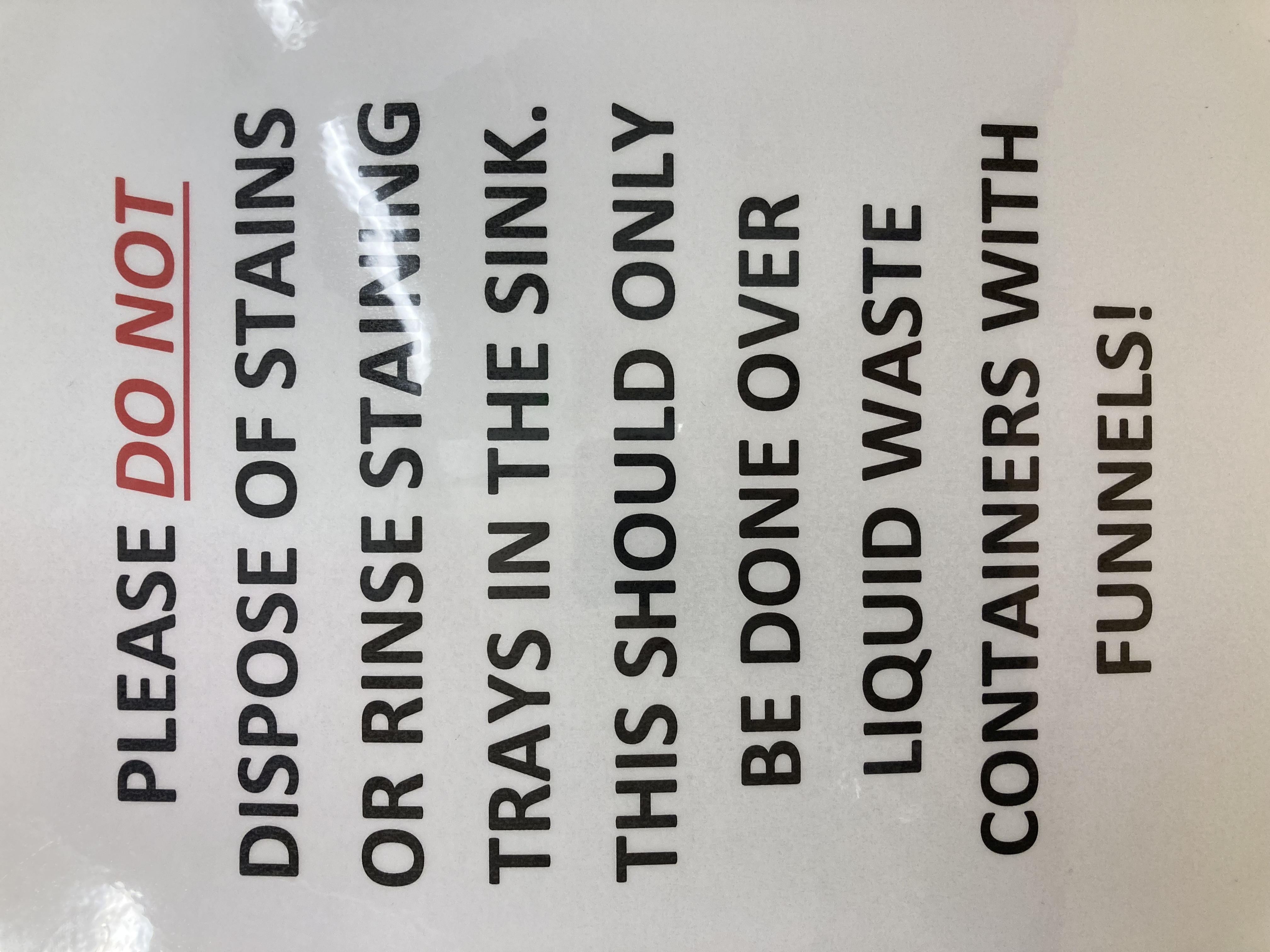
labeled waste collection container and then completely wiping the small amount of excess stain out of the gram stain collection tray with paper towels. The paper towels are then discarded, and the dry staining tray is put away. I have included pictures that
we have in our labs that show students how this should be done. Also, I would greatly advise AGAINST doing any waste collection in any sinks at any time. Hope this helps, and please feel free to contact me if you have any questions or concerns.
Dwayne F. Henry
Instructional Lab Manager of Chemical and Biological Science
Collegewide Chemical, Physical, & Biological Hazards sub-committee
TPSS Biology Club Advisor
ACS Committee for Chemical Safety Executive Board
ACS CHAS Chair-elect/2-Year College Lab Safety Community of Practice Chair
ACS CHAS Peer-Led Workshops Mentorship Team
Montgomery College TP/SS campus
(240) 567-1418
From: ACS Division of Chemical Health and Safety <DCHAS-L**At_Symbol_Here**PRINCETON.EDU> on behalf of Kayla Johnson (she/her) <Kayla.L.Johnson**At_Symbol_Here**UVM.EDU>
Sent: Wednesday, August 12, 2026 10:59 AM
To: DCHAS-L**At_Symbol_Here**PRINCETON.EDU <DCHAS-L**At_Symbol_Here**PRINCETON.EDU>
Subject: [DCHAS-L] Gram Stain Rinsing Collection | Teaching Lab
CAUTION: This email originated from outside of Montgomery College.
DO NOT click on links or open attachments unless you were expecting the email, recognize the sender, and know the content is safe.
Hello,
We got a question from a TA coordinator about collecting large amounts of Gram stain and the best way to do rinsing to collect it as waste without high chances of splash back.
One option that was suggested was to use bins in the sink to then transfer to a waste container or directly rinse Gram stain into the waste container. The issue that by using a squirt bottle or sink into the waste container, the container sits high enough that
it would create splash back onto the students.
The second option was not as feasible; it was to have the plumbing disconnected and have the bin placed directly under the drain. Seemed like the best option until we discovered we cannot have the plumbing disconnected in this space.
Would anyone have any good ideas?
Thank you,
Kayla Johnson, MS, CESCO (she/her)
CAS and RSENR Lab Safety Coordinator
Kayla.L.Johnson**At_Symbol_Here**uvm.edu
University of Vermont
667 Spear St
Burlington, VT 05405
802.656.8496
"Every individual matters. Every individual has a role to play. Every individual makes a difference." - Jane Goodall