| The Home page of ILPI's Safety Data Sheet (SDS) Resource, the leader in SDS information since 1995! | |
| The history and philosophy behind this resource. | |
| A curated collection of books and reference materials concerning Safety Data Sheets and closely related topics. | |
| Paste your plain text SDS into the SDS-Demystifier, and it will be converted into a hypertext-enriched document with links to detailed explanations of each key term. | |
| An extensive list of frequently asked questions about Safety Data Sheets including regulations, content, compliance, and more. | |
| A humorous take on Safety Data Sheet jargon. Fill in the blanks on our entry form to generate a personalized Unsafety Data Sheet to share with your coworkers. | |
| Since 1995, we've maintained this massive curated list of the best places to find Safety Data Sheets on the Internet. | |
| Way more than a glossary, this hypertext-enhanced resource covers hundreds of SDS-related terms and expert knowledge. Each entry includes both the SDS relevance and links to additional authoritative resources. | |
| Archived results of Safety Data Sheet related polls taken by some of our millions of site visitors | |
| You are here! The OSHA regulations behind SDS regulations, including the inspection guidelines and over 400 official interpretations letters under the Hazard Communication Standard | |
| Commercial suppliers of SDS authoring and management software as well as cloud compliance services. | |
| Commercial companies that will create SDS's for your specific needs as well as SDS translation companies. |

Safety signs, banners, and scoreboards? Get yours at Safety Emporium!
OSHA Hazard Communication Letters of Interpretation
Hazard communication effective dates and SDSs
- Issued
- Record type
- Interpretation
- Historical standard
- HCS 2012 (historical)
- Current standard
- HCS 2024, as amended
ILPI assessment: Core SDS advice remains useful; transition relief is historical
Employers should retain the most recent SDS received and make it readily accessible under paragraph (g)(1) and paragraph (g)(8). An old MSDS can remain relevant when no replacement has been received; see the missing-SDS FAQ. Retaining access for chemicals in use is separate from exposure-record retention.
The 2015 implementation deadlines and good-faith enforcement accommodations are historical. They are not open-ended permission to supply HCS 1994 labels or sheets today. Current implementation dates concern HCS 2024; its conditions must be considered separately.
The importer response matters even for chemicals imported for a business’s own use: an employer may also be the importer, with classification and SDS duties. The unused-product return example is a limited scenario, not general permission to resell hazardous chemicals with outdated information. The linked 2015 HCS 2012 directive is historical; use the current HCS inspection guidance for present enforcement context.
Last reviewed: .
About this ILPI assessment
This comparison with current requirements is not a finding that OSHA has formally withdrawn this letter. This assessment reflects editorial judgment informed by human review and AI assistance. It is an opinion, may contain errors or omissions, and is not an official OSHA determination. For guidance on how OSHA requirements apply to your circumstances, contact your local OSHA office.
OSHA's notice about interpretation letters
The following notice is published on OSHA's interpretation pages; it is general guidance, not a letter-specific withdrawal notice.
OSHA requirements are set by statute, standards and regulations. Our interpretation letters explain these requirements and how they apply to particular circumstances, but they cannot create additional employer obligations. This letter constitutes OSHA's interpretation of the requirements discussed. Note that our enforcement guidance may be affected by changes to OSHA rules. Also, from time to time we update our guidance in response to new information. To keep apprised of such developments, you can consult OSHA's website at https://www.osha.gov.
Source: OSHA's original letter page.
July 27, 2015
Ms. Robin Smith
RMS Interests, LLC
251 Hidden Creek Drive
Dripping Spring, Texas 78620
Dear Ms. Smith:
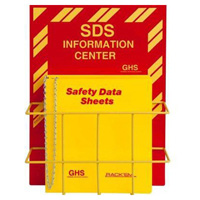
Your employees can stay informed and safety-ready with right to know stations and labels from Safety Emporium.
Thank you for your letter to the Occupational Safety and Health Administration's (OSHA) Directorate of Enforcement Programs. Your questions concern the safety data sheets (SDSs) requirements under the revised Hazard Communication standard (HCS 2012), 29 CFR 1910.1200 [ILPI: Original HCS 2012 context · Current HCS]. This letter constitutes OSHA's interpretation only of the requirements herein, and may not be applicable to any questions not delineated within your original correspondence. Your paraphrased questions and our responses are below. Please excuse the delay in our response.
Question 1: Is it permissible for an employer to maintain material safety data sheets (MSDSs) instead of safety data sheets (SDSs) for chemicals that were received by the employer prior to June 1, 2015?
Response: Yes, as long as the MSDS is compliant with the former Hazard Communication standard, HCS 1994 [ILPI: Original HCS 1994 context · Current HCS]. Manufacturers and importers must provide revised, 16-section SDSs [ILPI: Original HCS 2012 context · Current HCS] by June 1, 2015. The chemical manufacturer or importer is required to provide the updated SDSs with the first shipment after a safety data sheet is updated or upon request.
Question 2: If chemicals received directly from foreign manufacturers after June 1, 2015, are not accompanied by SDSs which comply with the revised standard, what is the expectation for the employer? Is it sufficient to demonstrate through internal documentation that the employer has made a genuine attempt to obtain new SDSs?
Response: Generally, importers are the first businesses with employees within the Customs Territory of the United States to receive hazardous chemicals produced in other countries for distribution within the United States. The importers must provide HCS 2012 [ILPI: Original HCS 2012 context · Current HCS]-compliant SDSs to others downstream by June 1, 2015. However, OSHA recognizes that some manufacturers and importers may be unable to create updated SDSs because they have not received the necessary information from upstream suppliers to classify and develop their own SDSs. In this limited circumstance, OSHA will use its enforcement discretion to evaluate whether the manufacturer or importer has performed due diligence and made good faith efforts to obtain the necessary information to comply with the June 1, 2015 effective date. Manufacturers and importers should, therefore, document all efforts to alternatively obtain the required information, such as attempts to contact their supplier to obtain the proper information; reasonable efforts to find alternate suppliers who could provide timely and accurate classifications; and reasonable efforts to find relevant data themselves. Where the manufacturer or importer provides sufficient documentation of these efforts, OSHA will, on a case-by-case basis, exercise enforcement discretion to not cite the manufacturer or importer for not having HCS 2012-compliant SDSs.
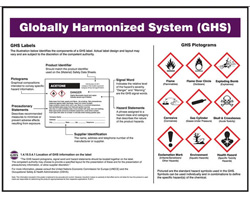
Ensure your workers are trained with safety posters and more from Safety Emporium.
On July 20, 2015, OSHA issued the revised Hazard Communication 2012 directive, CPL 02-02-079 [ILPI: Original 2015 HCS 2012 directive · Current HCS inspection guidance]. The revised directive includes guidance on hazard classification, and updates the requirements for labeling and for safety data sheets (SDSs). The Instruction also provides guidance to compliance safety and health officers on how to enforce the revised Hazard Communication standard [ILPI: Original HCS 2012 context · Current HCS] during its transition period [ILPI: Original HCS 2012 context · Current HCS; historical HCS 2012 implementation dates] and when fully implemented. The revised HCS 2012 directive titled Inspection Procedures for the Hazard Communication Standard (HCS 2012) can be found at https://www.osha.gov/OshDoc/Directive_pdf/CPL_02-02-079.pdf [ILPI: Original 2015 HCS 2012 directive · Current HCS inspection guidance]*.
Employers who are not manufacturers, importers, or distributers must maintain the most recently received version of the MSDS/SDS. An employer who is maintaining an MSDS for a product received prior to June 1, 2015, would be considered to be compliant with the Hazard Communication standard unless the manufacturer, importer or distributor has provided a new, HCS 2012 [ILPI: Original HCS 2012 context · Current HCS]-compliant SDS and the employer did not maintain the new SDS. Employers may contact manufacturers, importers or distributors of products they have previously ordered to request new SDSs, and under 29 CFR 1910.1200(g)(6)(iv) [ILPI: Original HCS 2012 context · Current HCS], the SDS must be provided. If the manufacturer is located outside the United States, the contact would be made to the distributer or importer. If an employer has made a good faith effort to contact the importer or distributor and has still not received the SDS, the local OSHA Area Office may be contacted to provide assistance.
[ILPI note: At issuance: HCS 2012. Keep the latest sheet received accessible under paragraph (g)(8). Importer duties under paragraph (g)(6)(iv) and record retention are separate issues.]
Question 3: Is it acceptable for the employer to ship unused product back to the foreign supplier or manufacturer with the most recently received version of the MSDS, even if it does not meet the new standard?
Response: The responsibilities of the employer have not changed under the HCS 2012 [ILPI: Original HCS 2012 context · Current HCS]. Under paragraphs 1910.1200(g)(1) [ILPI: Original HCS 2012 context · Current HCS] and (g)(8) [ILPI: Original HCS 2012 context · Current HCS], employers must have and maintain the most current MSDS/SDSs and make them available to their employees. An employer who is not a chemical manufacturer has no responsibility to create SDSs. The employer in the scenario you described may use the most recently received MSDS/SDS when shipping back unused products. Ideally, the manufacturer or supplier should already have the most recent MSDS/SDS for that product. The MSDS/SDS is for the benefit of downstream employees, such as dock workers, who may be exposed to the hazardous chemical(s).
Thank you for your interest in occupational safety and health. We hope you find this information helpful. OSHA's requirements are set by statute, standards, and regulations. Our letters of interpretation do not create new or additional requirements but rather explain these requirements and how they apply to particular circumstances. This letter constitutes OSHA's interpretation of the requirements discussed. From time to time, letters are affected when the Agency updates a standard, a legal decision impacts a standard, or changes in technology affect the interpretation. To assure that you are using the correct information and guidance, please consult OSHA's website at https://www.osha.gov. If you have further questions, please feel free to contact the Office of Health Enforcement at (202) 693-2190.
Sincerely,
Thomas Galassi, Director
Directorate of Enforcement Programs
*Accessibility Assistance: Contact the OSHA Directorate of Enforcement Programs at (202) 693-2129 for assistance accessing PDF materials.
The original official public domain version of this document is available from OSHA at https://www.osha.gov/laws-regs/standardinterpretations/2015-07-27.