| The Home page of ILPI's Safety Data Sheet (SDS) Resource, the leader in SDS information since 1995! | |
| The history and philosophy behind this resource. | |
| A curated collection of books and reference materials concerning Safety Data Sheets and closely related topics. | |
| Paste your plain text SDS into the SDS-Demystifier, and it will be converted into a hypertext-enriched document with links to detailed explanations of each key term. | |
| An extensive list of frequently asked questions about Safety Data Sheets including regulations, content, compliance, and more. | |
| A humorous take on Safety Data Sheet jargon. Fill in the blanks on our entry form to generate a personalized Unsafety Data Sheet to share with your coworkers. | |
| Since 1995, we've maintained this massive curated list of the best places to find Safety Data Sheets on the Internet. | |
| You are here! Way more than a glossary, this hypertext-enhanced resource covers hundreds of SDS-related terms and expert knowledge. Each entry includes both the SDS relevance and links to additional authoritative resources. | |
| Archived results of Safety Data Sheet related polls taken by some of our millions of site visitors | |
| The OSHA regulations behind SDS regulations, including the inspection guidelines and over 400 official interpretations letters under the Hazard Communication Standard | |
| Commercial suppliers of SDS authoring and management software as well as cloud compliance services. | |
| Commercial companies that will create SDS's for your specific needs as well as SDS translation companies. |

Safety signs, banners, and scoreboards? Get yours at Safety Emporium!
Workplace Hazardous Materials Information System - WHMIS
Definition
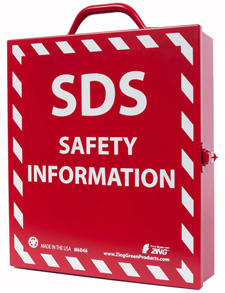
Your employees can stay informed and comply with OSHA regulations with SDS information stations and compliance products from Safety Emporium.
The Workplace Hazardous Materials Information System (WHMIS) or Système d'information sur les matières dangereuses utilisées au travail, (SIMDUT) in French, is Canada’s national hazard communication system for hazardous materials in the workplace. This includes assessment, signage, labeling, Safety Data Sheets and worker training. WHMIS closely parallels the U.S. OSHA Hazard Communication Standard.
Do not confuse this with HMIS®, a hazard/label system of the American Coatings Association (formerly called the National Paint and Coatings Association).
Additional Info
WHMIS supplier requirements are established by Canada’s Hazardous Products Act and Hazardous Products Regulations, administered by Health Canada. Workplace requirements are established and enforced under federal, provincial and territorial occupational health and safety legislation. CCOHS explains these responsibilities. WHMIS.org is a comprehensive portal for official WHMIS information.
Worldwide workplace safety standards evolved during the early 2000's with the advent of a United Nations effort called the Globally Harmonized System of Classification and Labeling of Chemicals (GHS) which established a worldwide model framework so that various trading partner countries could establish substantially similar requirements for classifying chemical hazards, labeling containers, and communicating hazards via Safety Data Sheets (SDSs). As a result, most countries of the world now use the same format for SDSs, although there are differences in the precise implementation of the model regulations among various countries.
CURRENT REQUIREMENTS: Amended WHMIS
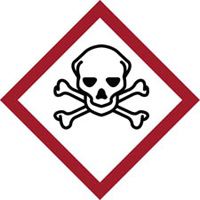
Get your GHS-compliant labels and signs from Safety Emporium.
WHMIS adopted the GHS in 2015, which led to the familiar name "WHMIS 2015." Amendments to the Hazardous Products Regulations took effect on December 15, 2022, aligning WHMIS with GHS Revision 7 and selected provisions of Revision 8. The transition ended on December 14, 2025. Current guidance refers to amended WHMIS; "WHMIS 2015" describes the former requirements.
Key changes include a new Chemicals Under Pressure hazard class, an Aerosols category for non-flammable aerosols, new flammable-gas subcategories, and revised physical and chemical property information in SDS Section 9. Health Canada’s current enforcement approach emphasizes compliance promotion until July 19, 2027, but the amended requirements are already in force and Health Canada may compel compliance when warranted.
Introduction of GHS: WHMIS 2015
The original WHMIS 2015 transition replaced WHMIS 1988 by December 1, 2018. Some of the key changes introduced in 2015 were:
- A new hazard classification procedure addressing both physical and health hazards.
- New label requirements, including the use of Hazard Statements, Precautionary Statements, and pictograms.
- Adoption of the GHS's now-familiar 16-part format for SDSs.
- Elimination of the WHMIS 1988 requirement to update SDSs every three years, however they must still be updated whenever new information about a product becomes available.
While these changes were considerable, the roles and responsibilities under the now-obsolete WHMIS 1988 system still apply.
Suppliers or employers seeking to withhold required confidential business information, such as a hazardous ingredient’s chemical identity, must file a claim for exemption with Health Canada under the Hazardous Materials Information Review Act. This is not a general registration requirement for every proprietary product.
PREVIOUS VERSION (NOW OBSOLETE): WHMIS 1988 Classification Scheme (See CCOHS info)

Encourage safety on the job with electronic safety scoreboards from Safety Emporium.
WHMIS 1988 was replaced by WHMIS 2015 which is based on the Globally Harmonized System and is no longer in use. The information in this section is obsolete and is presented solely for historical purposes. WHMIS 1988 had six broad hazard classifications:
- Class A - Compressed Gas
- Class B - Flammable and Combustible Material
- Division 1: Flammable Gas
- Division 2: Flammable Liquid
- Division 3: Combustible Liquid
- Division 4: Flammable Solid
- Division 5: Flammable Aerosol
- Division 6: Reactive Flammable Material
- Class C - Oxidizing Material
- Class D - Poisonous and Infectious Material
- Division 1: Materials causing immediate and serious toxic effects
- Subdivision A: Very toxic material
- Subdivision: Toxic material
- Division 2: Materials causing other toxic effects
- Subdivision A: Very toxic material
- Subdivision B: Toxic material
- Division 3: Biohazardous Infection Material
- Division 1: Materials causing immediate and serious toxic effects
- Class E - Corrosive material
- Class F - Dangerously reactive material
The Controlled Products Regulations (CPR), prescribed what information must be on labels and (what were then called MSDSs but are now simply SDSs) under WHMIS 1988. You can find the 9 required parts as well as information on how one was to write an MSDS on this CCOHS web page [NOTE: This is OBSOLETE information, presented here only for reference purposes].
SDS Relevance
Employers must ensure that workers have access to the Safety Data Sheets required for hazardous products used in the workplace, and receive the education and training needed to work safely with those products. Consult the applicable federal, provincial or territorial workplace requirements.
Canada’s amended WHMIS and the U.S. HCS 2024 both incorporate updates based on GHS Revision 7, but their requirements are not identical. For example, WHMIS requires labels and SDSs in both English and French, while HCS requires English and permits additional languages. Requirements also differ for supplier identification, confidential ingredient concentration ranges, and certain SDS information. Consult the CCOHS comparison of amended WHMIS and HCS 2024 before assuming that a U.S. label or SDS meets Canadian requirements.
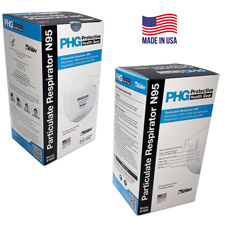
Get your PPE such as made in USA NIOSH-approved N95 masks from Safety Emporium.
Further Reading
- OSH Answers Fact Sheets on WHMIS and the now-obsolete WHMIS 1988 at CCOHS.
- Workplace Hazardous Materials Information System at WorkSafeBC has some terrific downloadable WHMIS manuals and publications.
- Reference Manual for the WHMIS Requirements of the Hazardous Products Act and Controlled Products Regulations at Health Canada (historical WHMIS 1988 requirements).
- Workers' Rights, including the right to refuse work if it endangers health/safety, at the Infrastructure Health & Safety Association.
- WHMIS Training module, an on-line training course for a number of Canadian colleges...looks like anyone can use it, though.
See also: The MSDS FAQ- Canadian MSDS's, OSHA