| The Home page of ILPI's Safety Data Sheet (SDS) Resource, the leader in SDS information since 1995! | |
| The history and philosophy behind this resource. | |
| A curated collection of books and reference materials concerning Safety Data Sheets and closely related topics. | |
| Paste your plain text SDS into the SDS-Demystifier, and it will be converted into a hypertext-enriched document with links to detailed explanations of each key term. | |
| An extensive list of frequently asked questions about Safety Data Sheets including regulations, content, compliance, and more. | |
| A humorous take on Safety Data Sheet jargon. Fill in the blanks on our entry form to generate a personalized Unsafety Data Sheet to share with your coworkers. | |
| Since 1995, we've maintained this massive curated list of the best places to find Safety Data Sheets on the Internet. | |
| You are here! Way more than a glossary, this hypertext-enhanced resource covers hundreds of SDS-related terms and expert knowledge. Each entry includes both the SDS relevance and links to additional authoritative resources. | |
| Archived results of Safety Data Sheet related polls taken by some of our millions of site visitors | |
| The OSHA regulations behind SDS regulations, including the inspection guidelines and over 400 official interpretations letters under the Hazard Communication Standard | |
| Commercial suppliers of SDS authoring and management software as well as cloud compliance services. | |
| Commercial companies that will create SDS's for your specific needs as well as SDS translation companies. |

Safety signs, banners, and scoreboards? Get yours at Safety Emporium!
Threshold Limit Value (TLV®)
Definition
Threshold Limit Values (TLV's) are guidelines (not standards) prepared by the American Conference of Governmental industrial Hygienists, Inc (ACGIH) to assist industrial hygienists in making decisions regarding safe levels of exposure to various hazards found in the workplace.
A TLV® reflects the level of exposure that the typical worker can experience without an unreasonable risk of disease or injury. TLVs® are not quantitative estimates of risk at different exposure levels or by different routes of exposure.
Additional Info
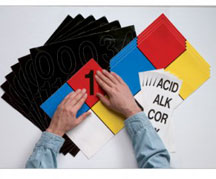
NFPA signs and kits are available at Safety Emporium.
Whereas OSHA sets regulatory exposure limits/levels such as the PEL and TWA, TLV's® are a scientific opinion based solely on health factors; there is no consideration given to economic or technical feasibility of implementing controls to keep worker exposure levels below this level. These health risks/factors are determined by ACGIH from a review of existing peer-reviewed scientific literature by committees of volunteer experts in public health and related sciences. TLV's® are not consensus standards (i.e. formulated by a broad-based committee across a particular industry), but ACGIH's opinion.
ACGIH was forced to adopt a rigorously-worded stance regarding the use of TLV's® by regulatory agencies as a result of a lawsuit filed in 2000 by the trona industry; see the first few links under Further Reading for more information.
In our opinion, while the plaintiffs raised some interesting points regarding due process issues and so-called "secret rulemaking", the implications of the suit are a blow to the timely review and incorporation of the latest peer-reviewed scientific studies into state and federal worker protection standards.
There are significant overhead expenses (including preparation for legal challenges) required to support ongoing development and maintenance of TLV's. In that regard, ACGIH's Foundation for Occupational Health & Safety (FOHS) was set up as a charitable 501(c)(3) corporation to support these efforts. Tax-deductible donations to the FOHS help ensure the continued existence of scientifically-based ACGIH® TLVs and BEIs.
SDS Relevance
Although ACGIH TLV's® themselves do not carry the force of law, 29 CFR 1910.1200 (g)(2)(i)(C)(2) and (g)(2)(vi) require some kind of exposure limit such as an OSHA PEL or TLV® to be listed on the Safety Data Sheet if such a limit is available.
TLV's and PEL's are not available for most chemicals; the absence of an exposure limit simply means that the chemical has not gone through the very rigorous and expensive scientific peer-review process that would permit conclusions to be drawn about "safe" and "hazardous" exposure levels. Unless the sheet specifically states that no danger exists, make every effort to limit your exposure through good chemical hygiene practices, workplace engineering controls and use of Personal Protective Equipment.
Further Reading
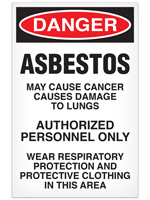
Signs, training materials and supplies from Safety Emporium can help ensure a safe and healthy workplace.
- ACGIH's 2001 press release on the TLV® lawsuit settlement, courtesy of the Internet Archive Wayback Machine.
- TLV®/BEI® Development Process: An Overview a ACGIH.
- You can order ACGIH's Guide to Occupational Exposure Values 2021 through Amazon.com.
- What's All This TLV Stuff About Anyhow? at EHS Today.
- ACGIH Threshold Limit Values at DefendingScience.org has a detailed discussion of industry attacks on the the ACGIH, including a bibliography.(Thanks to the Internet Archive for saving the study).
- The OSHA Occupational Chemical Database includes exposure limits, sampling information and more.
- OSHA's Chemical Exposure Health Data contains workplace sampling data from 1984 onward.
See also: ALARA, PEL and TWA.